Lego Prussian Army Soldiers
Lego Prussian army soldiers bring the 19th century’s most professionally trained military force to brick form, the disciplined, innovative army that crushed Napoleon III at Sedan in 1870, unified Germany under Bismarck, and laid the doctrinal foundations that shaped every major military of the 20th century.
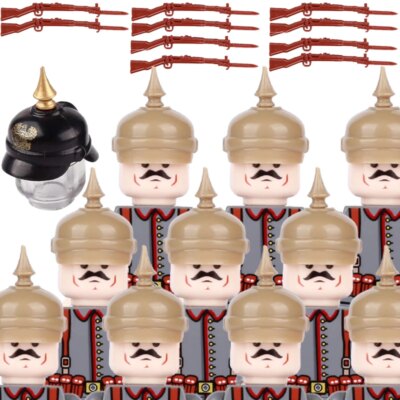
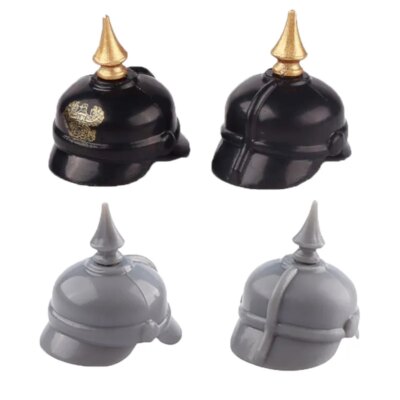
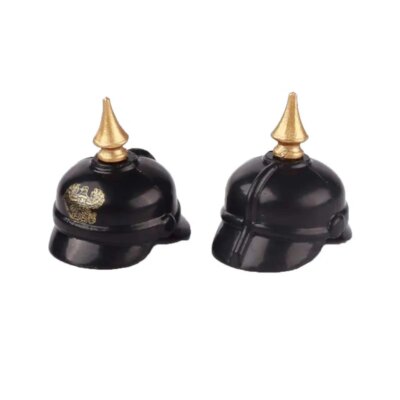
The iconic Pickelhaube spiked helmet, the dark Prussian blue uniform, and the white cross-belts make these figures among the most visually distinctive in all of historical military brick collecting.
Showing all 5 resultsSorted by popularity
-
 Price range: $54.00 through $55.00
-
 Price range: $41.99 through $42.99
-
Original price was: $45.00.$40.00Current price is: $40.00.
-
Price range: $31.00 through $32.00
-
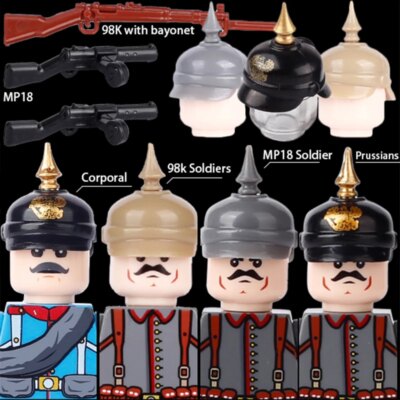
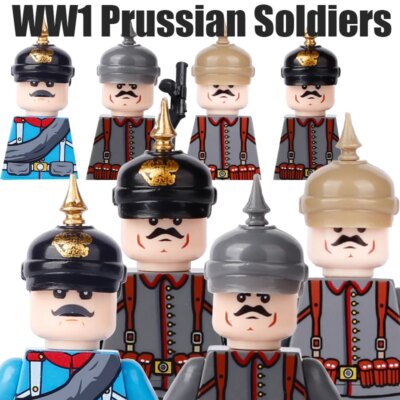
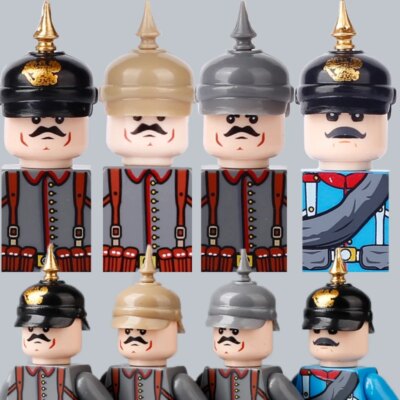
Showing all 5 resultsSorted by popularity
The Prussian Army in Brick Form
The Prussian Army underwent dramatic visual and tactical changes across the 18th and 19th centuries. Frederician-era Prussians of the Seven Years War (1756–63) fight in powdered wigs and tricorn hats with smooth-bore muskets. Napoleonic-era Prussians at Waterloo wear the distinctive Landwehr shako and carry flintlock rifles. The peak period for Prussian visual identity — the dark blue tunic with the Pickelhaube — covers roughly 1842 to 1914, encompassing the wars of German unification and the early years of WW1.
At The Brick Battle Prussian soldiers sit at a fascinating intersection of historical military collecting. The lego roman soldier ancient warrior range and lego medieval soldiers collection connect the pre-gunpowder eras that Prussian military doctrine eventually superseded. The First World War bricks WW1 range shows the direct successor to the Prussian Army — the German Imperial forces of 1914–18 who wore the Stahlhelm over their grandfathers’ Pickelhaube. For WW2 continuity, the WW2 ground forces build range shows how Prussian military tradition evolved into the Wehrmacht. The broader infantry combat toys figure hub completes the personnel picture across all eras.
Lego Prussian Army Soldiers — Frequently Asked Questions
Are Prussian Army sets suitable for Napoleonic War dioramas? Yes — Prussian forces fought at Waterloo and throughout the Napoleonic Wars. Their distinctive blue uniforms contrast beautifully with French Imperial Guard figures for one of the most visually dramatic period battle scenes possible in brick form.
How do Prussian soldiers differ visually from WW1 German soldiers? Dramatically. Prussian soldiers wear the Pickelhaube spiked helmet and dark blue tunic. WW1 German soldiers wear the Stahlhelm steel helmet and feldgrau grey uniform. The visual transition between the two — which happened during WW1 as the Pickelhaube proved inadequate against artillery — is one of the most interesting in military history.
Can I build the Battle of Sedan (1870) with these figures? Yes — Prussian infantry against French Imperial Guard figures, with artillery on both sides, recreates one of the decisive battles of the 19th century in brick form. The crushing Prussian victory that ended the Second French Empire and unified Germany is one of history’s most dramatic military turning points.